Tier 2 math intervention: six weeks of small-group sessions
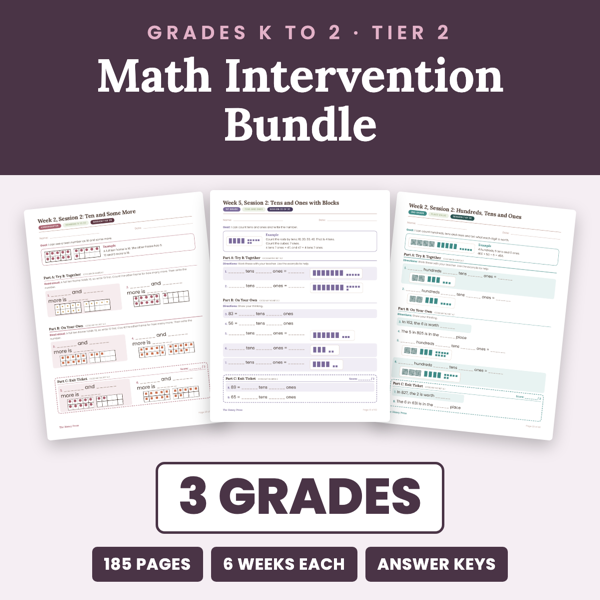
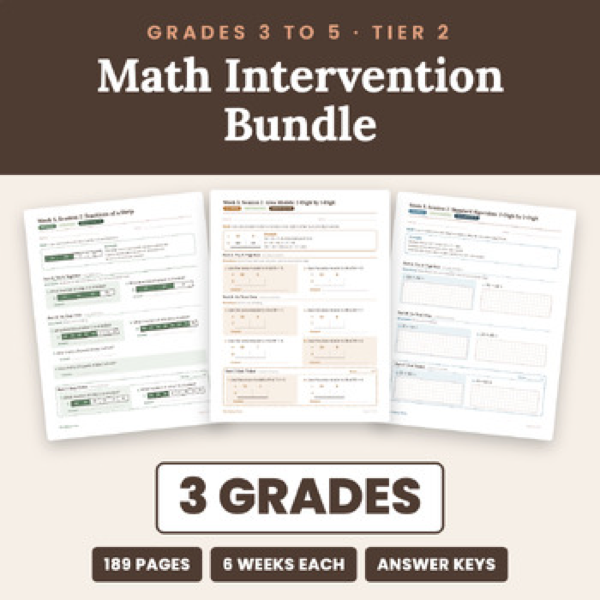
Six weeks of small-group math, planned: a Pre-Check to group from, thirty sessions of 15 to 20 minutes (10 to 15 in Kindergarten), a check at the end of every week, and a Post-Check. One packet per grade, Kindergarten through 5th grade.
Intervention packets by grade
Bundles: best value
How the six weeks run
Once a few students are pulled into a small group, the hard part is Monday: what to teach, in what order, and how to show it is working. These packets answer that for six weeks, on the skills a grade's later work rests on.
From Pre-Check to Post-Check
- Pre-Check first. Six parts, one for each week, four items each. A student's scores show which weeks they need.
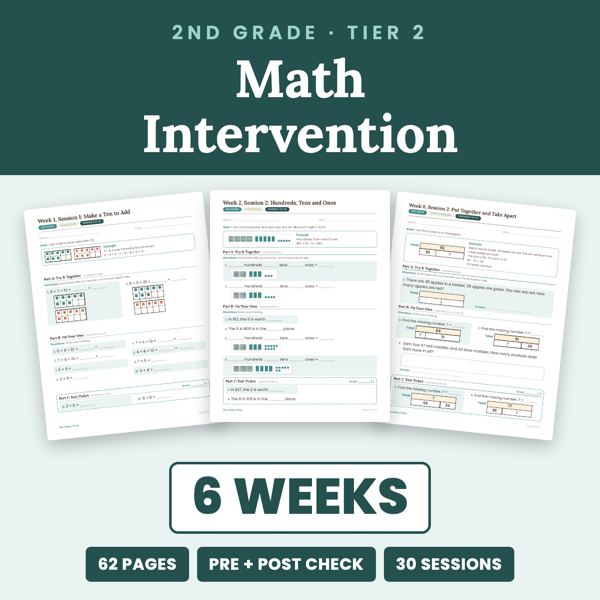
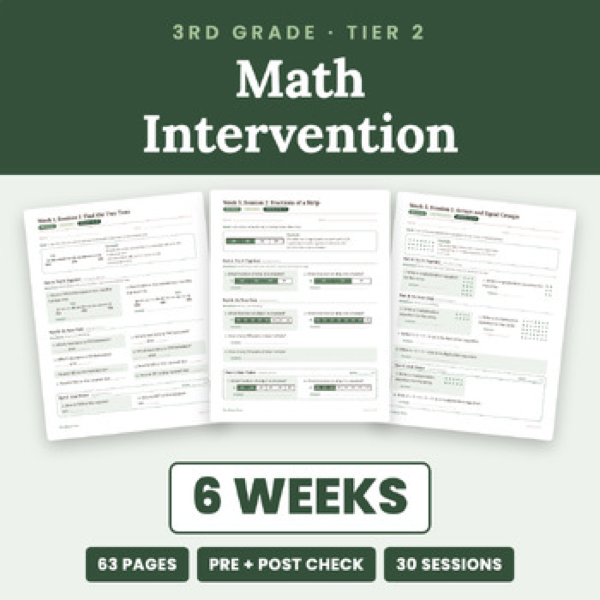
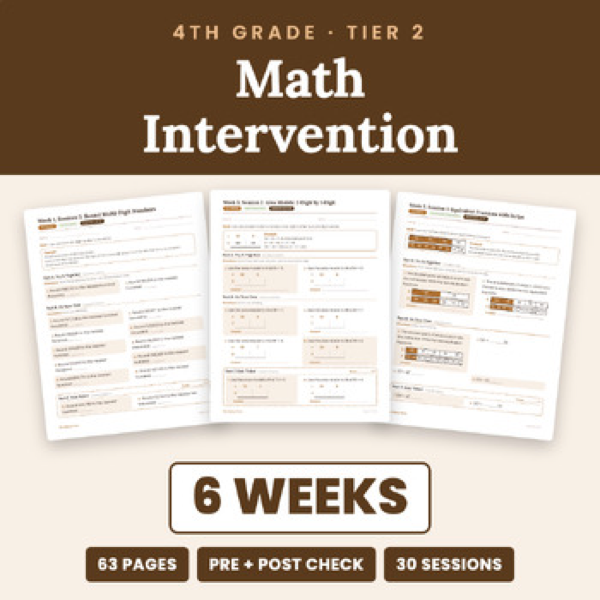
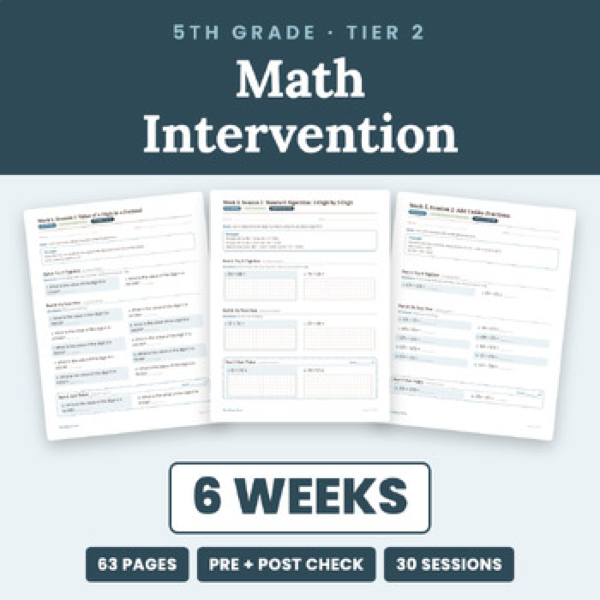
- Five sessions a week. Each one page: a goal, a worked example with every step written out, Try It Together, On Your Own, and a two-item exit ticket. In Kindergarten the teacher reads every direction and item aloud, points to each picture in a worked example while the group counts, and students answer with a number, a circle or a drawing.
- A Toolkit page each week with the words to know and two worked examples.
- A Week Check of eight items at the end of each week, with a student self-check.
- Post-Check last. The same item types as the Pre-Check with new numbers. In Kindergarten, the same kinds of questions with new pictures and items.
- Records: a Pre-Check Class Summary, a Group Progress Log, a student progress graph, and answer keys numbered to every page.
What each grade covers
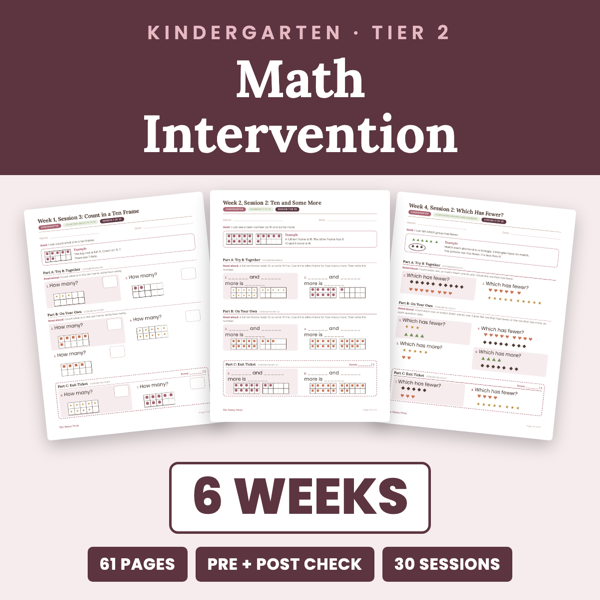
- Kindergarten Math Intervention (61 pages, $9.95): Six weeks, every page read aloud by the teacher: counting objects to 10, numbers 11 to 20, counting on and number order, comparing groups and numbers, adding within 10, and taking away and making 10.
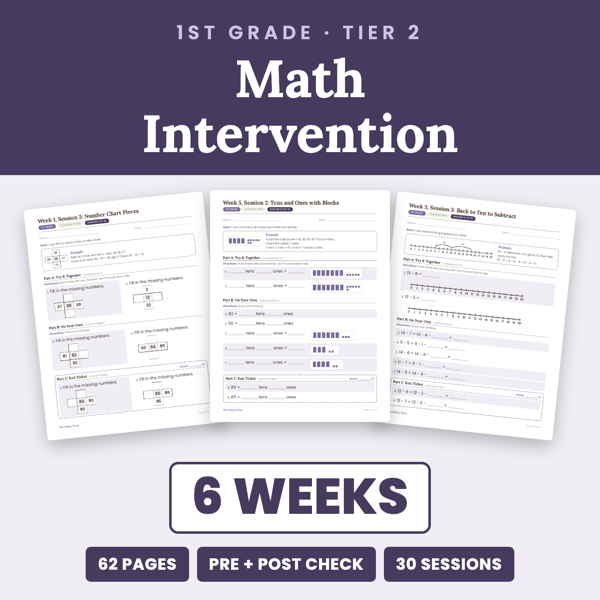
- 1st Grade Math Intervention (62 pages, $9.95): Six weeks: counting to 120, adding and subtracting within 20, story problems, tens and ones, and adding and subtracting tens.
- 2nd Grade Math Intervention (62 pages, $9.95): Six weeks: facts to 20, place value to 1,000, comparing and skip counting, adding and subtracting within 100, and story problems.
- 3rd Grade Math Intervention (63 pages, $9.95): Six weeks: rounding, adding and subtracting within 1,000, multiplication and division facts and what they mean, fractions on strips and number lines, equivalent and comparing fractions.
- 4th Grade Math Intervention (63 pages, $9.95): Six weeks: place value to 1,000,000, multi-digit adding and subtracting, multiplying and dividing with area models and partial quotients, equivalent and comparing fractions.
- 5th Grade Math Intervention (63 pages, $9.95): Six weeks: decimal place value, powers of ten and rounding decimals, multi-digit multiplication and division, adding and subtracting fractions, multiplying fractions.
The Kindergarten through 2nd grade bundle carries all three grades for $20.95, against $29.85 bought separately. The 3rd through 5th grade bundle carries all three grades for $20.95, against $29.85 bought separately. Each one suits an interventionist or a resource room that works with groups from more than one grade.
What this is, and what it is not
This is targeted practice with progress monitoring. The checks are short classroom checks written for these packets: they are not a screener, they are not normed, and they have not been validated. Use them alongside your school's own data, and treat the Teacher Guide's decision points as starting points for your judgment.
For a whole class that needs the same review, the 20 days of test prep cycles the year's skills one page a day, and the 20-day units teach one skill a day for four weeks.
Frequently asked questions
How long is each session?
Fifteen to twenty minutes in 1st to 5th grade and 10 to 15 minutes in Kindergarten, one page: a goal, a worked example, practice together, practice alone, and a two-item exit ticket with a score box. Five sessions make a week, six weeks make the packet.
Is the Pre-Check a screener?
No. It is a short classroom check with six parts, one for each week of the packet, four items each. It shows which weeks a student needs, which helps you group, but it is not normed or validated and it does not replace the screener your school uses to decide who is in Tier 2.
How do I track progress?
Every week ends with an eight-item Week Check, and the packet has a Pre-Check Class Summary, a Group Progress Log and a graph students fill in themselves. A Post-Check with the same item types as the Pre-Check and new numbers (new pictures and items in Kindergarten) closes the six weeks, so the change shows side by side.
Can I skip weeks?
Yes. The Pre-Check parts line up with the weeks, so a student who scores well on a part can skip that week. The Teacher Guide gives suggested decision points, which are starting points for your judgment, not rules.