Going into a new grade: find the real starting line first
A calm, paper-based way to find each student's real starting point in week one. Each packet checks last year's skills (Form A), gives leveled reteach pages, then rechecks with new problems (Form B), with answer keys for every problem.
Going Into packets, 1st through 5th grade
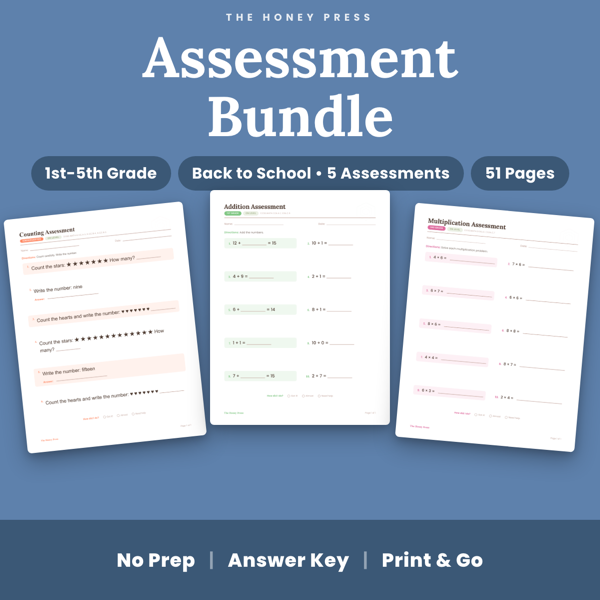 Going Into Next Grade Math Assessments Bundle $14.95 View on TPT
 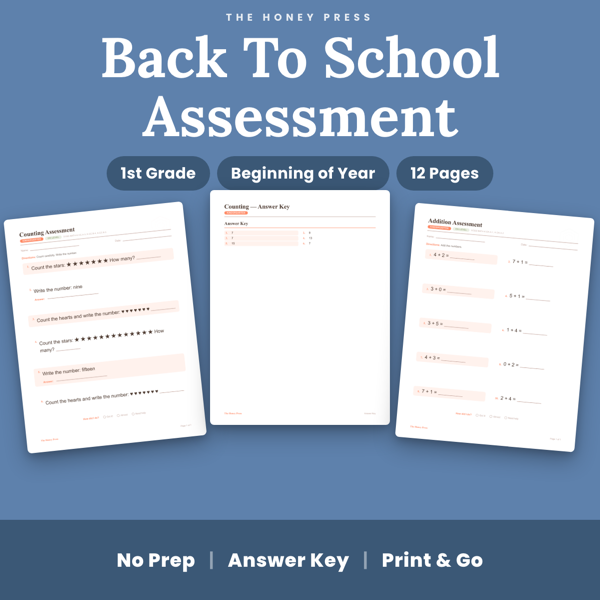 Going Into 1st Grade Math Assessment $6.95 View on TPT
 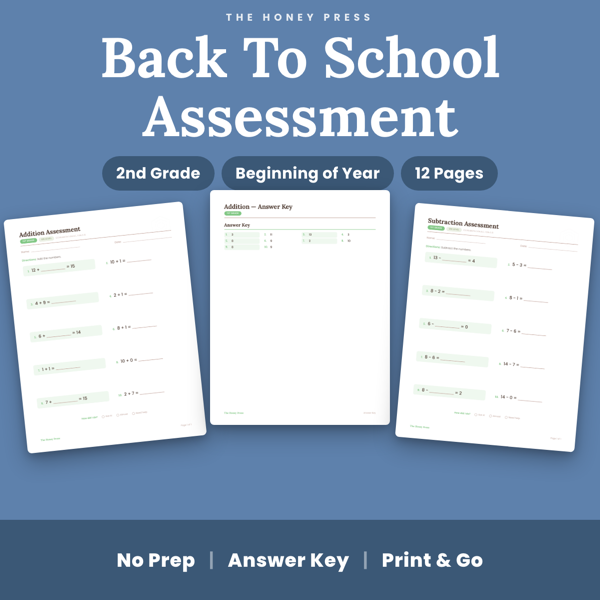 Going Into 2nd Grade Math Assessment $6.95 View on TPT
 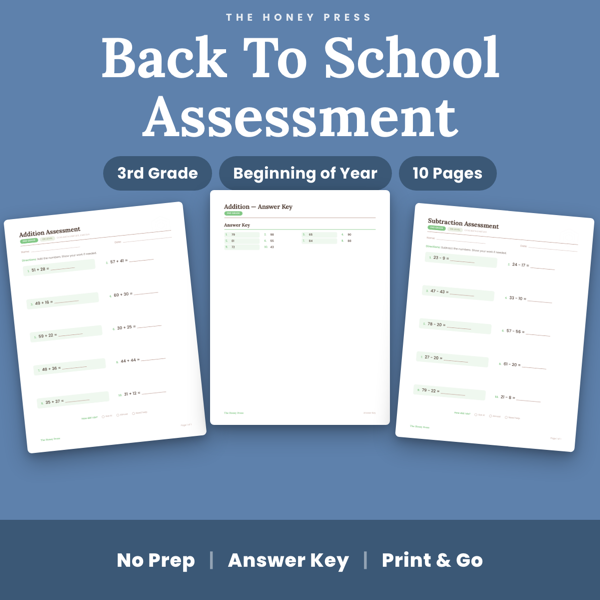 Going Into 3rd Grade Math Assessment $6.95 View on TPT
 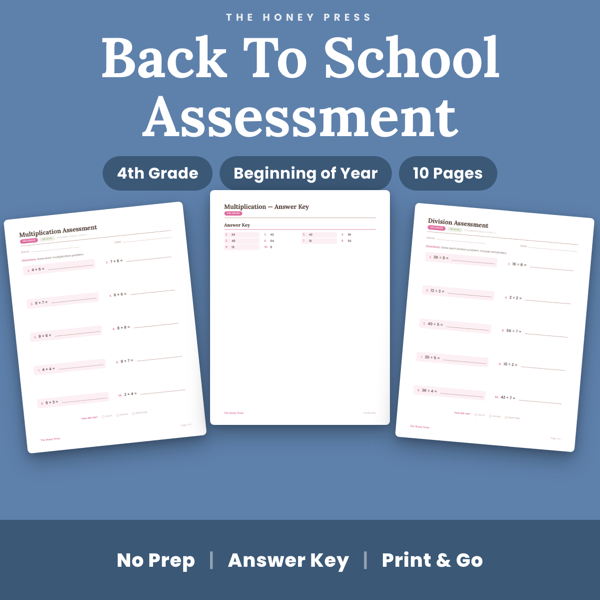 Going Into 4th Grade Math Assessment $6.95 View on TPT
 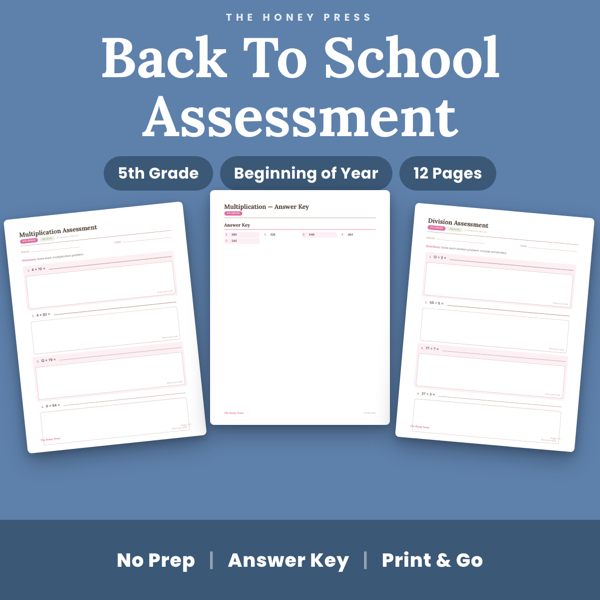 Going Into 5th Grade Math Skills Check $6.95 View on TPT
 See inside before you buy
These are real pages from the Going Into 2nd Grade packet, exactly as they print: the teacher note, a Form A assessment page, a leveled reteach page, and a readiness check. Every transition shares the same structure.
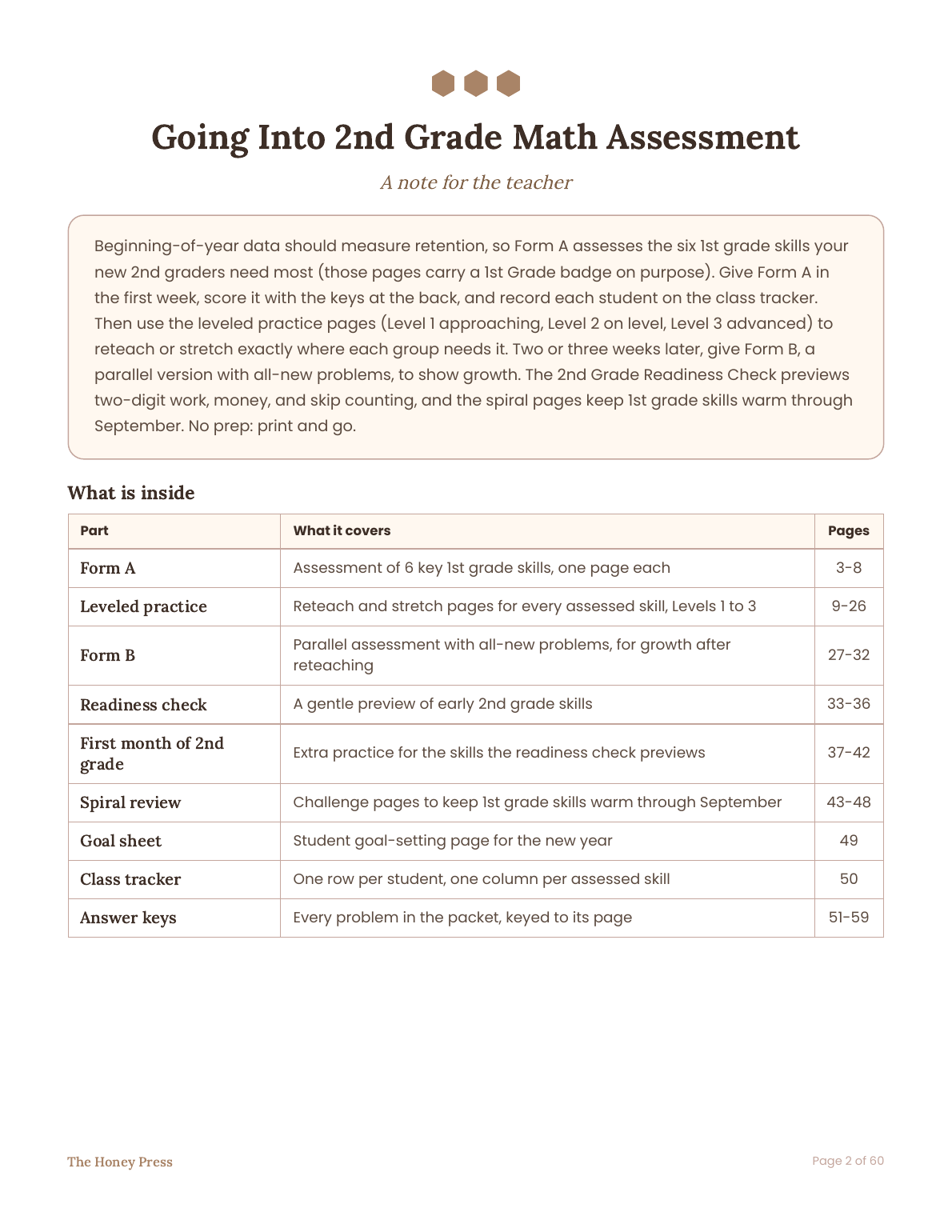
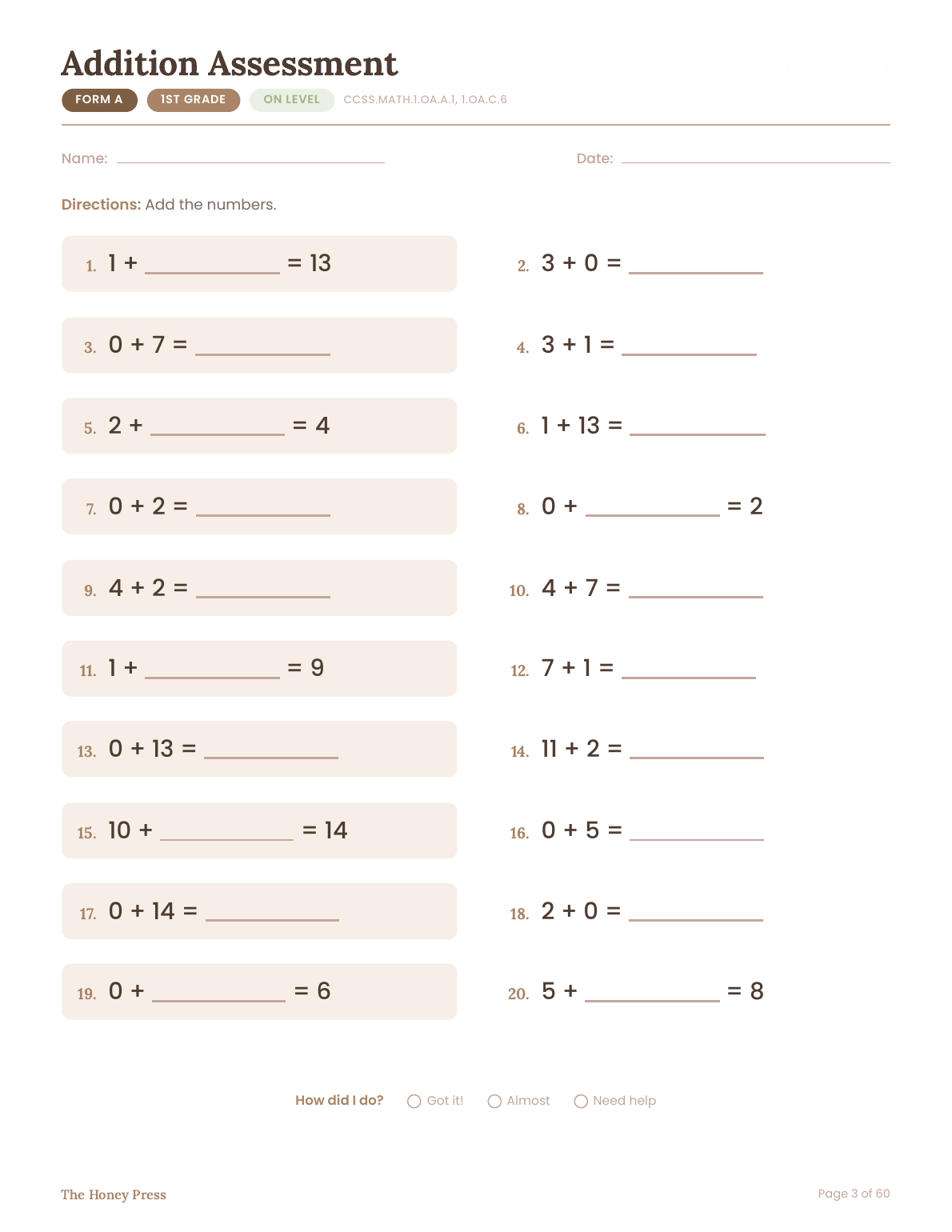
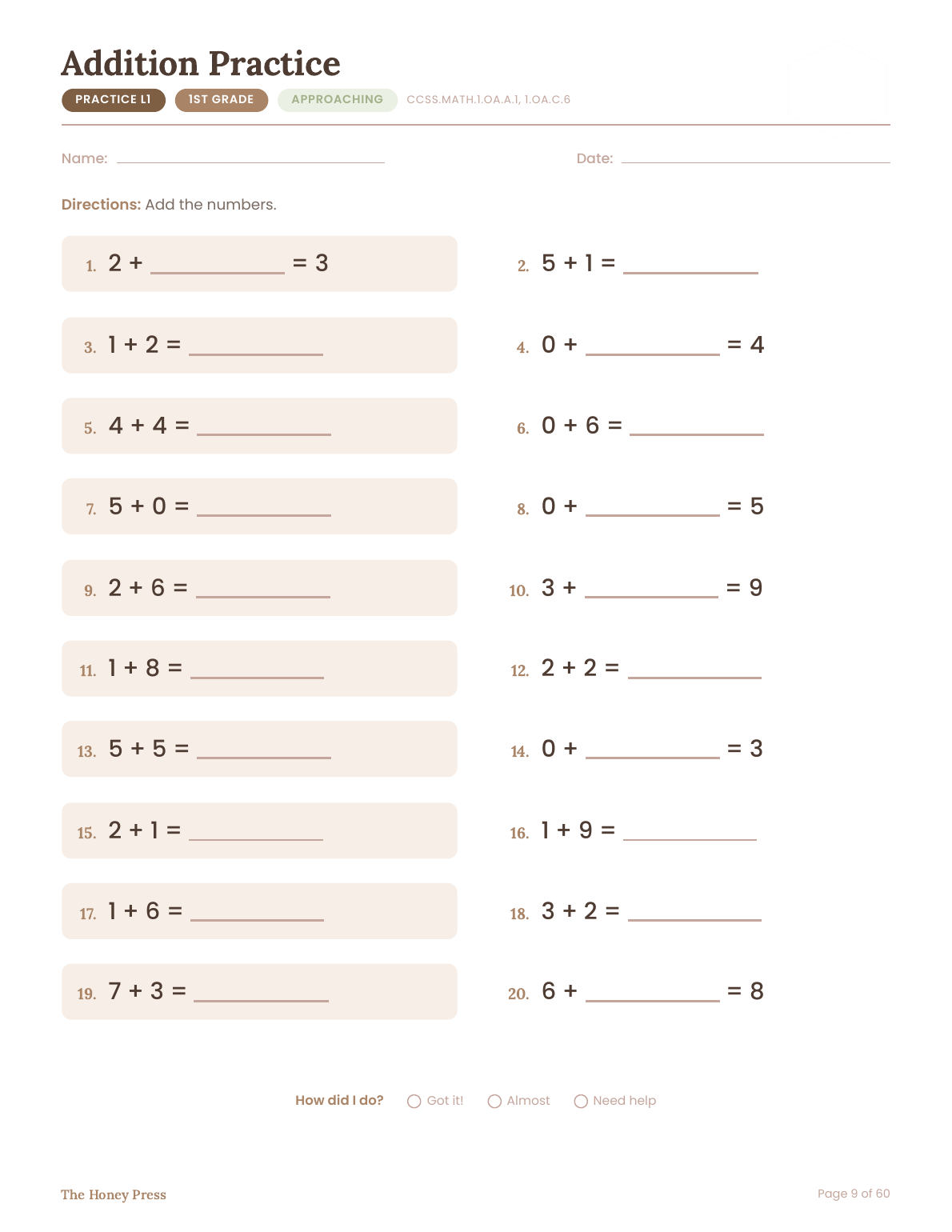
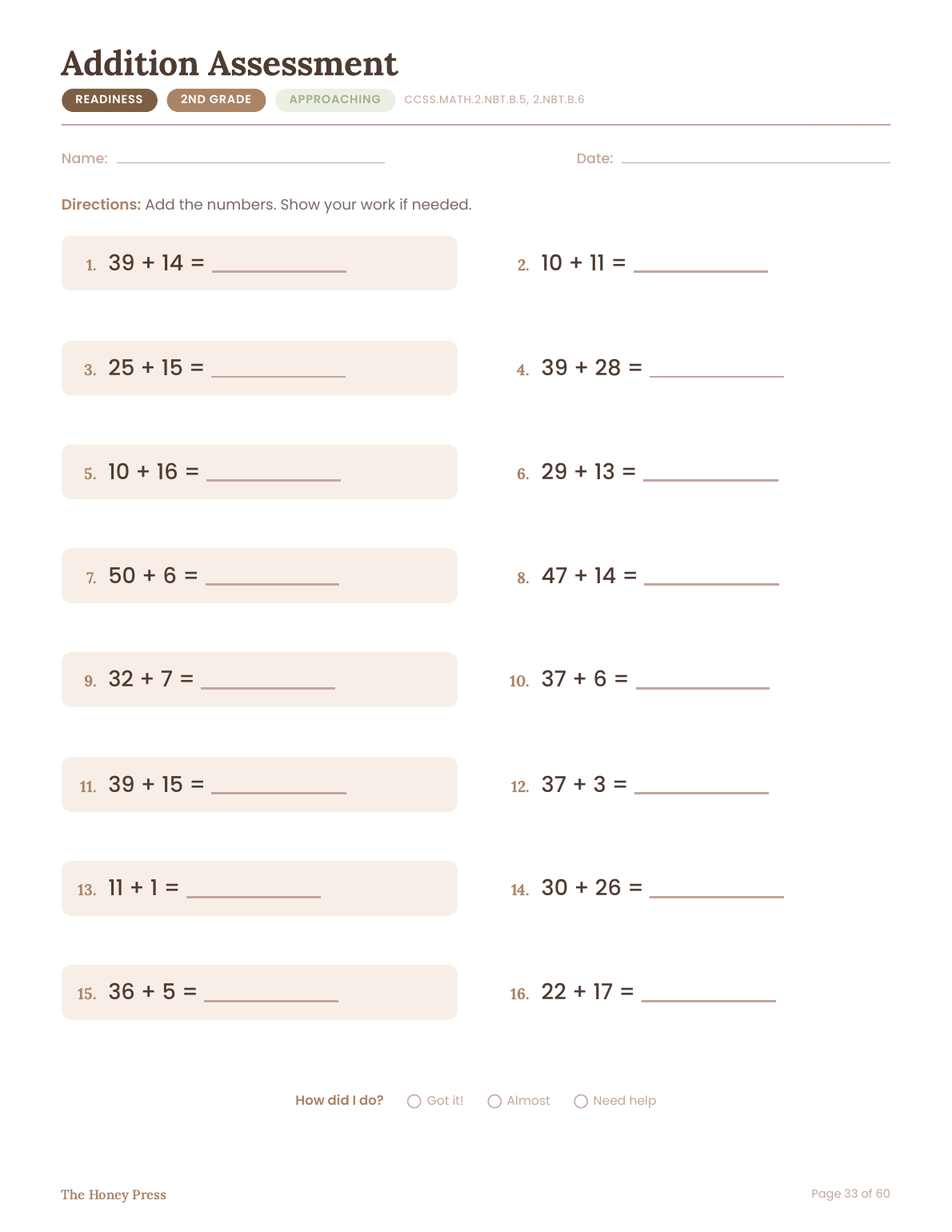
Tap or click the page to flip through. Arrow keys work too.
How the week-one check works
Every September, twenty-some students walk into your room wearing the same grade level on paper. Inside that room, quietly, they are spread across two or three years of actual math. One incoming 5th grader owns long division; the one next to him is still counting on his fingers under the desk. The first week of school tells you very little unless you go looking, on purpose, at what each child brought with them.
That is the whole idea behind my Going Into line: a calm, paper-based way to find each student's real starting point in week one, reteach what slipped over the summer, and prove the growth a few weeks later. Here is how the cycle works, whether you use my packets or build your own.
What a going into a new grade check should measure
Not the new grade. Your incoming 3rd graders have never been taught 3rd grade math, so testing them on it in September produces one page of guesses and a lot of discouraged eight-year-olds. The honest baseline is retention of the previous grade's key skills: the six Kindergarten skills 1st grade stands on, or the 4th grade multiplication, division, fractions, and place value that 5th grade is built from.
This is why every assessment page in my packets is badged with the prior grade, deliberately. It keeps your records honest, and it means a low score reads as "summer slide to repair," not "child failing the new grade in week one." I wrote up which skills to put on a beginning of year math assessment for each grade in a separate post.
The four-part cycle that makes September data useful
Form A: the week-one baseline
One clean page per skill, spread over the first week rather than dropped as a single scary test. One or two pages a day fits inside your normal first-week rhythm, and by Friday you have a scored grid: one row per student, one column per skill.
Leveled practice: the reteach, built in
The tracker grid hands you your small groups. Behind every assessed skill sit practice pages at more than one level, from a gentler version for the student who needs another run to challenge sheets for the one who finished early and is now looking at you. Intervention and enrichment come out of the same file.
Form B: the growth check
A few weeks later, the same assessment rebuilt with entirely new problems. Same skills, same format, zero memorization effect. When a family asks how their child is settling in, Form A next to Form B is an answer with receipts.
The readiness pages: walking into the new grade
Each packet closes with a readiness check and a first-month section that previews the new grade's opening skills, so the file that started your year keeps teaching into October.
The Going Into packets, 1st through 5th
There is one packet per grade transition, each with Form A, the leveled practice, Form B, the readiness section, a student goal sheet, the class tracker, and answer keys for every problem. The bundle carries all five packets, over 300 pages, which is the version I point teams and looping teachers toward: print only the grades you teach and keep the rest for the year you loop.
After the baseline: keep the data moving
A September assessment is only as useful as what it feeds. The tracker grid maps straight onto small groups and MTSS paperwork, and the same review-first thinking runs through the rest of a well-set-up year: a weekly homework routine that spirals the skills you just assessed, and a sub folder stocked with review your class can run on the days you are out. Set all three up in August and the year mostly runs itself.
Frequently asked questions
Why does a going into 4th grade packet test 3rd grade skills?
Because that is what a beginning-of-year assessment should measure. Incoming students have not been taught the new grade yet, so retention of last year is the honest baseline. The assessment pages are badged with the prior grade deliberately, to keep your records accurate.
When should I give the week-one math check?
Spread Form A across the first week, one or two pages a day, rather than one long testing session. Score with the keys, mark the class tracker, and you have your small groups before the second Monday of the year.
What do I do with students who show gaps?
The reteach is built into the same packet. Leveled practice pages sit behind every assessed skill, from a softer level for students who need another run to challenge pages for the ones who finished early. A few weeks later, Form B, a parallel assessment with all new problems, shows the growth.
Are these packets only for teachers, or can parents use them over the summer?
Both. Families use them as a summer bridge before the new grade, and teachers use the same file as a week-one baseline. The pages are no-prep and every problem has an answer key, so nobody needs a teaching background to check the work.