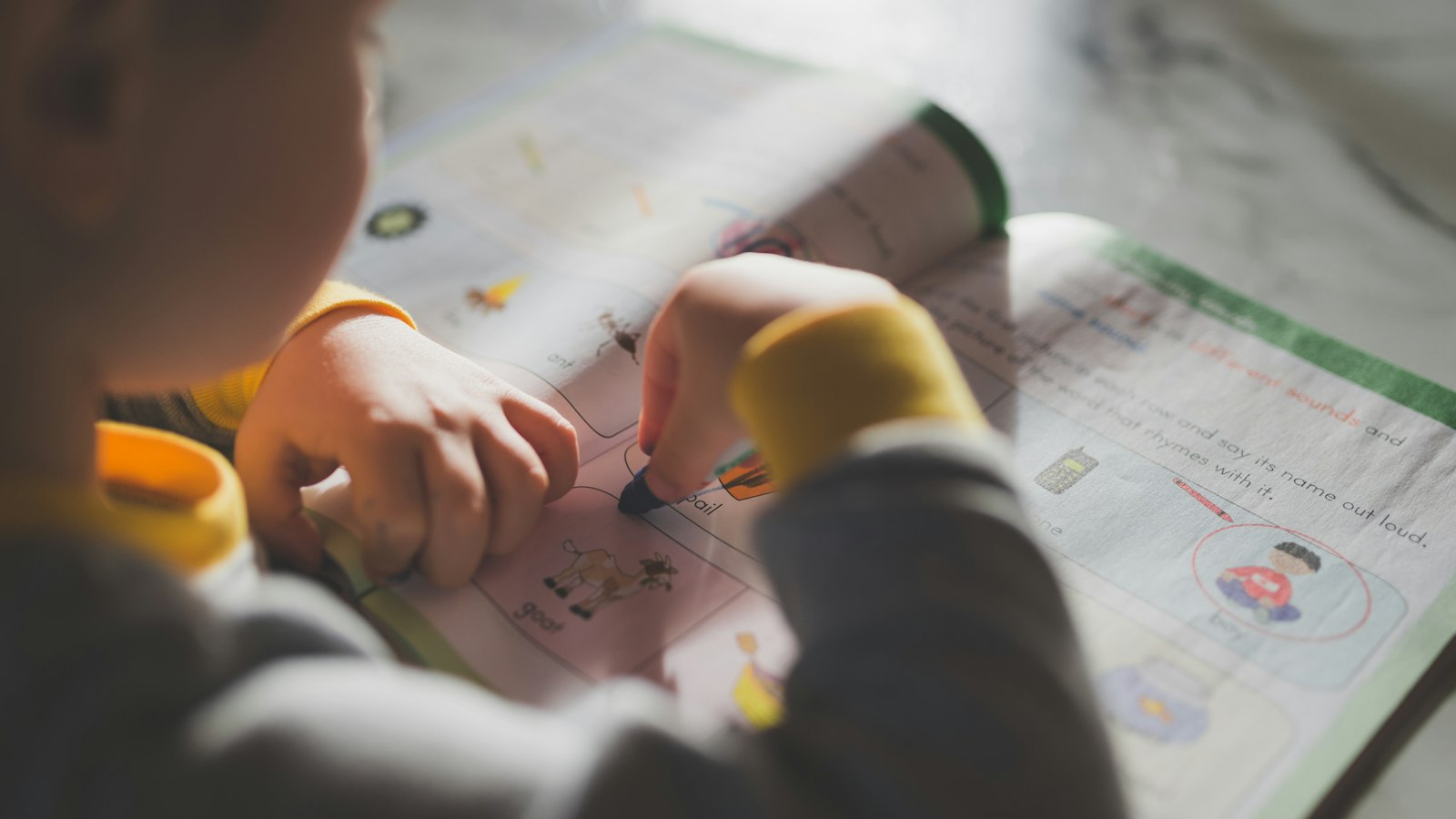
Reading sub plans that work are built on one rule: every answer the class needs is on the page in front of them. Leave one passage per day and three pages of work on it: comprehension questions a student can answer from the text alone, vocabulary taken from that passage, and a short writing response tied to it. Add a key that names the paragraph proving each comprehension answer. Leave out guided reading, centers, and the class novel. The rest of this post explains why, and how the day changes from Kindergarten to 5th grade.
Why the literacy block is the hardest one to leave
A math block can be handed over with a review packet. The literacy block is harder, because most of it runs on things only you know.
Guided reading is the clearest case. You know which students are in each group, what text level they are on, what you noticed in the last running record, and which prompt you use when a child stalls on a word. None of that fits in a sub note. A substitute who pulls a group anyway ends up running a read-around with a book they have never opened.
Centers have the same problem. The rotation chart makes sense to your class because you taught every station. A stranger moving the room through four rotations without knowing your signals is a quick way to lose it.
The class novel is its own trap. A sub who reads chapter 12 aloud has not read chapters 1 through 11, so the discussion stays shallow, and when a student asks about something that happened three chapters ago, nobody at the front knows.
So reading sub plans should not copy your normal block. They replace it with something a stranger can run: a text every student holds, and questions whose answers are inside that text.
The test for every question: is the answer in the passage?
A question like “Have you ever felt left out? Explain” has no answer the sub can check, and a question that needs background knowledge the passage does not give turns into an argument the sub cannot settle.
The fix is to write questions a student can prove by pointing, number the paragraphs, and put the paragraph in the key. In our 4th grade reading sub plans, Day 1 is a story called “The Lighthouse Puzzle.” Question 4 asks what “declared” means in paragraph 1. The key gives the answer, C, then paragraph 1 and the words that prove it: “by the second afternoon Dev had already declared that he was bored.” When two students disagree, the sub reads that paragraph aloud and the text settles it.
It also gives the sub one line for a stuck student: “Go back to the passage. The answer is in there. Find the paragraph and read it again.” If that does not work: “Circle the number and move on. Your teacher will look at it.” Nobody is asked to reteach.
What one reading day contains
An original passage with numbered paragraphs. Short enough for one sitting, and new to every student, so nobody has read ahead. Alternate fiction and nonfiction across the week.
Questions of mixed types, all answerable from the text. Start with literal questions so everyone gets going, then add inferential, vocabulary in context, main idea, text evidence, and author’s purpose. In our 3rd through 5th grade packets that is eight questions a day, each with four choices.
Vocabulary taken from the passage. In the upper grades, five words from that day’s text matched to their meanings, a short grammar section, then a part where students write sentences of their own with two of the words. A student who is unsure can find each word in the passage and see it used.
A writing response tied to the passage. A prompt that sends students back to the text gives the sub something to check. The Lighthouse Puzzle prompt asks what Grandfather meant when he said the puzzle “should not be finished until the right people came along,” and tells students to use details from the story. On nonfiction days our prompts ask students to explain what the passage taught, such as how yeast and gluten make bread rise. Some fiction days start from the story and ask for a time from the student’s own life. Every writing page ends with a short checklist (answered every part, used a detail from the passage, capitals and end marks), so the sub does not have to give those reminders.
Keys for every page. The sub uses them to settle disagreements during the block, and you use them the next morning. Without them, the sick day becomes a grading day.
Around those four pages, the folder needs a Note for the Substitute that lays out the block minute by minute, a roster with a column for each day, and a What Happened Today page asking which pages were finished, who was absent, and who needed help with what. Keep health and safety information out of the reading plans. Allergies, medication, custody, and who may pick a child up are handled by the office under school policy, so the note should tell the sub to follow that policy and to ask the office about anything medical or about dismissal.
How the day changes by grade
The rule stays the same at every grade. What changes is who reads the passage.
Kindergarten. The children do not read the text. The sub reads a short story aloud twice from a page written for the sub, which has a how-to-run-it box and the star words to explain on the second reading. Then the sub reads every question and all three answer choices aloud while children circle. Star words get traced and written, and word work covers rhyming, beginning sounds, and capital letters. Our Kindergarten packet lays that out as a 25-minute block.
1st grade. The sub reads the passage aloud once while students point to the words, then students read it again with a partner or on their own. Five questions with three choices each, a vocabulary and grammar page, and a draw-and-write page. The 1st grade packet is also a 25-minute block.
2nd grade. Still one read-aloud first, then students reread on their own or with a partner. The questions grow to six, and text evidence and author’s purpose join the mix. The 2nd grade packet runs 30 minutes.
3rd, 4th, and 5th grade. Students read the passage twice on their own. The block is 45 minutes: passage for the first 10, questions until 25, vocabulary and grammar until 35, and the writing response to finish. The backup is written into the note: if several students cannot read the passage alone, the sub reads it aloud once before the questions. Passages get longer each year. Ours run about 260 to 300 words in 3rd grade, 350 to 400 in 4th, and 460 to 480 in 5th.
Plan for the second day, the dead printer, and the fast finisher
One day out becomes two. Leave a spare day in the folder. Ours has a sixth day for this.
The copier is down. Leave one page of reading and language work that needs only a whiteboard. Ours for 3rd through 5th is five activities of five minutes each: a story chain where each student adds a sentence, a word of the day, a would-you-rather where every answer starts “I would rather… because…”, a five-sentence retell, and a sentence stretch. 2nd grade also has five. Kindergarten and 1st grade have four, 20 minutes in all.
Someone finishes in ten minutes. Give the sub a task that keeps the student on the same text. At 3rd through 5th: turn the writing page over and write a different ending, or underline the one sentence that matters most and write why. At Kindergarten: add more to the drawing and tell the sub about it.
Build it, or take one off the shelf
You can build this yourself. Pick a passage your class has not read, number the paragraphs, write questions you can prove by pointing, pull the vocabulary from the text, and write the key with the paragraph number beside each answer. If your math block needs the same treatment, what good math sub plans actually contain covers that side, and emergency sub plans for 4th grade math walks through the hour.
If you would rather not build it, our reading sub plans are one week per grade from Kindergarten through 5th, each with a spare day, a no-printer page, and keys that cite the paragraph. The 3rd, 4th, and 5th grade bundle puts all three upper grades together. The page of ELA sub plans has the packets side by side, and our math sub plans use the same Note for the Substitute, roster, and What Happened Today pages, so one folder covers both blocks.