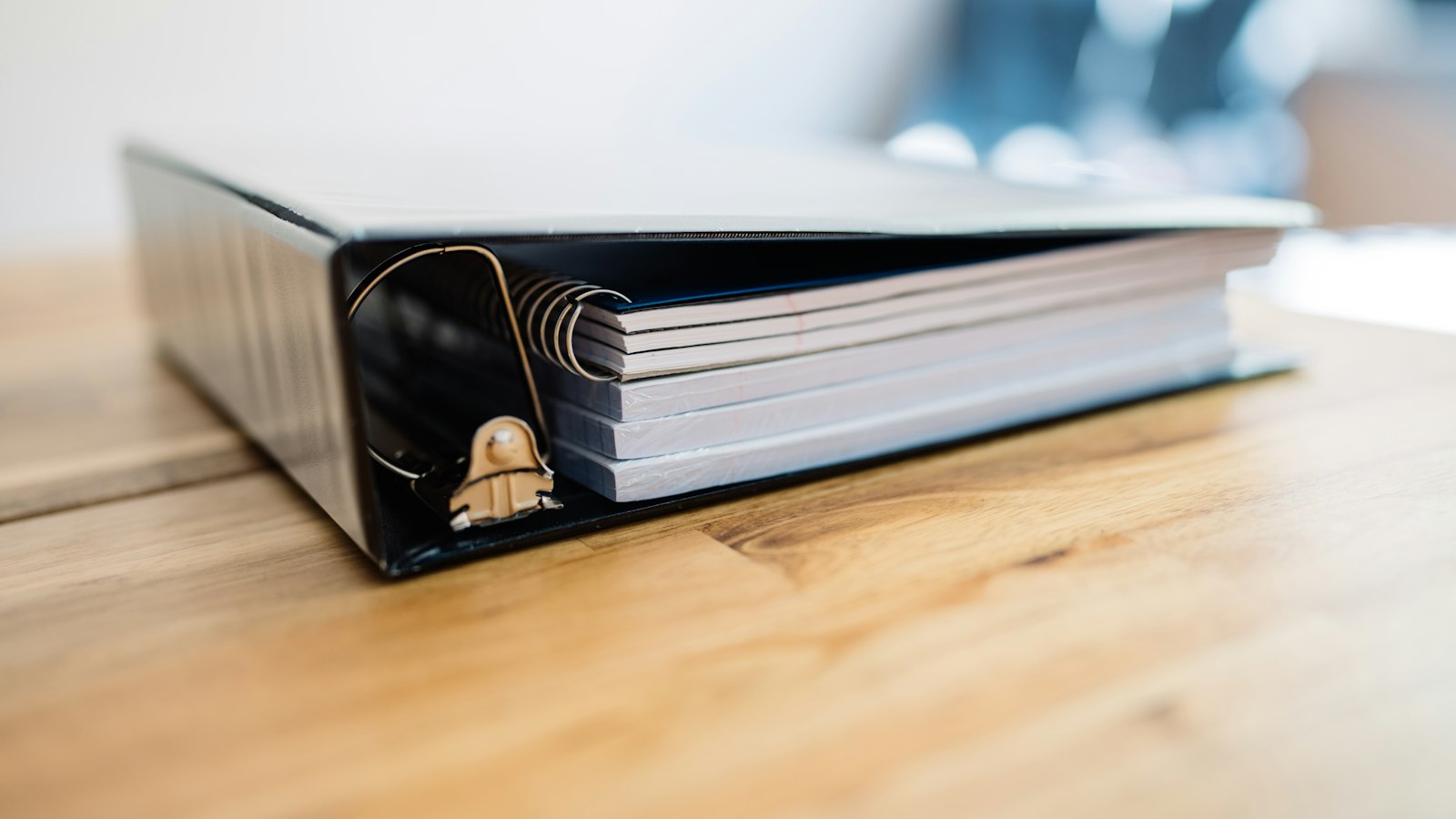
Short answer: the sub binder holds what stays true all year, and the sub folder holds the day. The binder is your schedule, class list, routines, dismissal and safety procedures, written once and updated when something changes. The folder is today’s plan, the copies already run, and the answer keys. The binder stays in one place. The folder gets emptied every time you are out, and someone has to refill it.
A common setup is one of the two doing both jobs: a binder with Tuesday’s worksheets in the front pocket, or a folder with a three-page behavior letter stapled to a math page. Split them and each one is easier to keep current.
What goes in the binder
The binder answers the questions any substitute will ask, whatever the day’s lessons are:
- Who is who: the office extension, the nurse, the neighbor teacher, the other adults who come to your room.
- The daily schedule, plus specials and pull-outs by day, with times.
- Arrival and dismissal: bus riders, car riders, walkers, after-care.
- The class list, health and allergies, students who need support, the seating chart.
- Procedures, the behavior plan, lunch and recess, and any duty the sub covers.
- Fire drill, lockdown, severe weather, and the evacuation route.
None of that depends on what you are teaching this week. You write it once and update it when the seating chart changes or a new student arrives.
Two sections need extra care. On the health page, write what each student’s plan says and who carries it out, and send the substitute to the nurse or the office for anything involving medication. Follow your school’s policy on what a sub may do; the binder should never ask a sub to make a medical call. On the dismissal page, leave custody and pickup restrictions to the office: one line, “Check with the office before releasing a student to any adult not on this list,” is safer than family details in a binder. Health and support pages are also confidential, which is one more reason the binder stays in one place instead of traveling around the room.
The substitute binder checklist goes through each section in order. If you would rather type into blanks than build pages, our Editable Sub Binder is 41 pages covering those sections. You can type into the PDF, edit the PowerPoint version in PowerPoint, Keynote or Google Slides, or print it and write by hand.
What goes in the folder
The folder holds the day, and only the day:
- A one-page plan with times: what happens at 9:10, at 10:25, at 1:40, and which clip holds the pages for each.
- The student copies, already run, clipped in the order of the day.
- The answer keys, clipped separately and marked TEACHER ONLY.
- An early finisher stack, more than the day should need.
- A report-back sheet on top, for the sub to fill in before leaving.
The plan page should point to the binder instead of copying it. “Dismissal: see the binder, Dismissal tab” is one line. Copy the dismissal list into every day’s plan and you end up with two lists that disagree.
Keep one report sheet in use. If the binder has a “while you were out” page and the folder has its own, the sub fills in whichever she finds first. Pick one and put it on top of the folder, where she starts and where you look first when you get back.
The work in the folder has to pass one test: a stranger can hand it out cold. That means review, not this week’s lesson. More on that in what good sub plans actually contain, and the free sub folder checklist lists the parts in the order a sub reaches for them.
Stock the folder for three situations
A folder built for one day works once. Stock it for three situations.
You wake up sick. This is the folder’s main job. One day of math and one day of reading, copied and clipped, keys separate. Pick skills the class learned at least a month ago: place value or addition and subtraction in 3rd grade, a mixed review in 4th or 5th.
One day turns into three. A stomach bug, or a sick child at home, can run past the first day, and the second day is where many folders run out. Stock at least two more days behind the first, each in its own labeled clip, in the order you want them used, each on a different skill so the class is not doing the same page three times.
The plan cannot run as written. The copier is down, or the copies are missing. Keep one plan in the folder that needs no paper: twenty minutes of math with a whiteboard and a marker. Write a number and have the class read it aloud, write it in words, and name the value of each digit. Put four numbers on the board to put in order, then find the difference between the largest and the smallest. Say “My answer is 1,200. What could the question have been?” and write the good questions on the board. Scale the numbers to your grade. That last activity works at every level in the room at once.
Keeping it stocked
- Refill the same week. When you get back, read the report sheet, copy whatever got used and put it back in its clip. Keep one master of each page in a sleeve at the back of the folder, so refilling is a trip to the copier, not a search through your files.
- Swap the review every quarter. Review should trail the class by about a month. September’s pages are good review in October; by January they are too easy to fill a block.
- Date the cover. Write when the work inside was last refreshed, so you can see at a glance when it is stale.
- Tell two people where it lives. The office and your neighbor teacher. Keep the binder and the folder together, in a spot a stranger can find.
If you want the folder built for you
The free Emergency Sub Binder Starter Kit builds the folder and covers the first situation. It is 14 pages: a folder cover, a fill-in note for the substitute, a who-to-call and dismissal page, a 15-minute checklist for putting the folder together, a roster, a What Happened Today sheet, and one day of review each for 3rd, 4th and 5th grade, 20 mixed problems per grade, with keys.
For the other two situations, our math and reading sub plans packets fit in the same folder. Each one is five days of review plus a spare sixth day. Each has a Note for the Substitute that lays out the block minute by minute, a What Happened Today report, an If You Cannot Print page for a morning without copies, and keys for every page. In math, each day is four pages: a warm up, two main pages and an early finisher page. In 2nd through 5th grade reading, each day is an original passage with comprehension questions, a vocabulary and grammar page and a writing response, and every answer in the key names the paragraph that proves it. Split one packet into day clips and it covers all three situations. For a longer absence, 3rd through 5th grade math also has a Week 2 packet with new problems.
The math and reading packets both run Kindergarten through 5th grade, on the math sub plans page and the reading sub plans page.
Build the binder once. Refill the folder every time you use it.