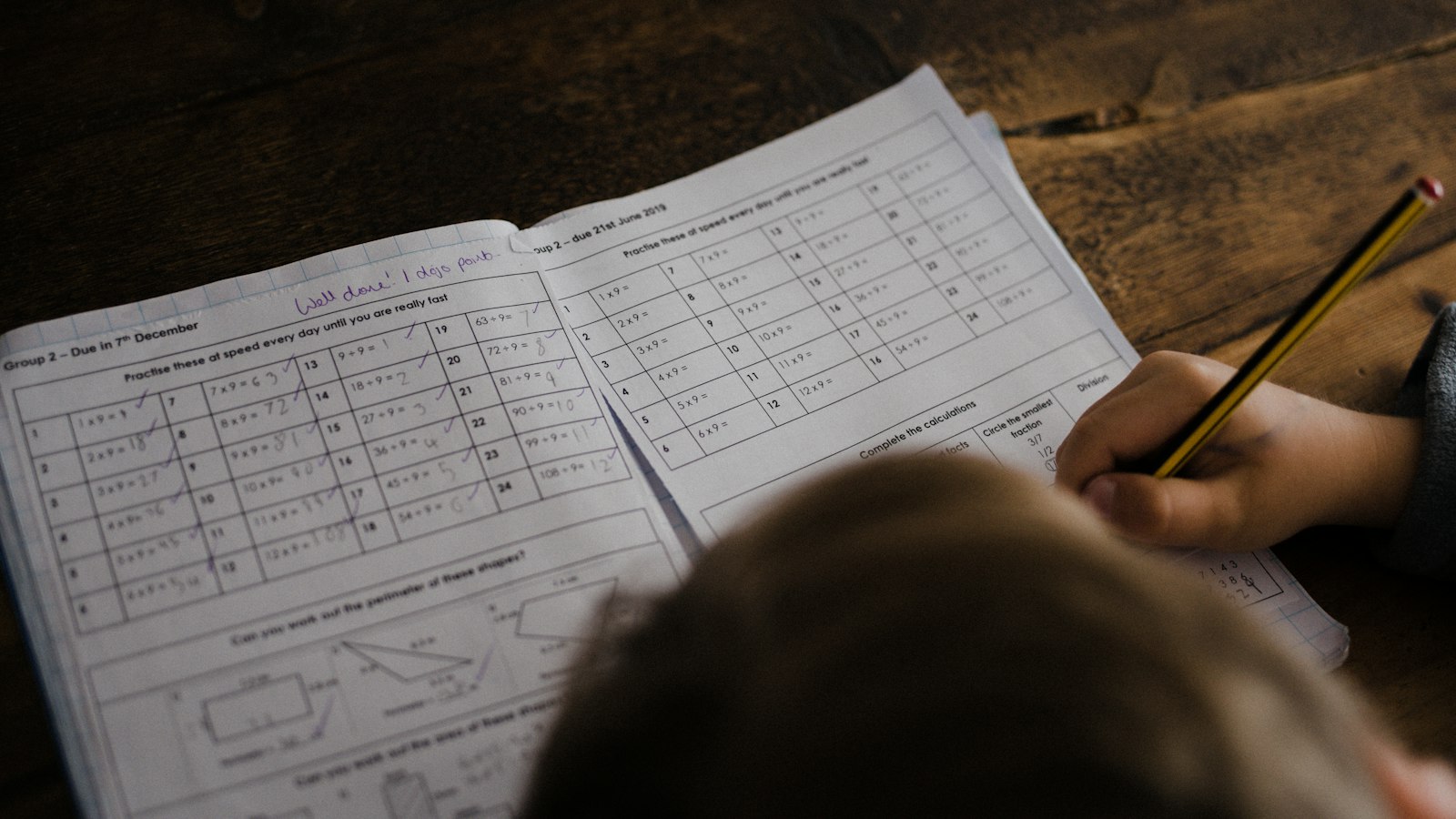
Fourth graders are the best possible class to leave with a substitute and also the worst, for the same reason: they know exactly how school works. A kindergartner tests a sub by crying. A 4th grader tests a sub by raising a hand and asking, with a completely straight face, whether the class is allowed to have free time now, because “we usually do.” Your sub has no way to know that you have never once given free time in your life.
So emergency sub plans for 4th grade are not about controlling chaos. Fourth graders are not chaotic. They are lawyers. The plans have to remove every loophole, and in math that means being very deliberate about which skills you leave behind.
The skill question is the whole question
Here is the trap specific to 4th grade. It is the year of the big new machinery: multi-digit multiplication, long division, fraction equivalence. From October onward, whatever you are currently teaching is something the class has known for a matter of days. Leave practice on the current unit and you have left new material, whatever the label says. A third of the class will do it wrong for an hour, cheerfully, and cement the errors while you sleep.
Safe skills for a 4th grade sub day are the ones with mileage on them:
Multi-digit addition and subtraction with regrouping. Third grade skill, a full year of practice behind it, and still worth maintaining. Nobody needs to ask the sub anything.
Multiplication facts and single-digit-times-multi-digit problems. By 4th grade, fact practice is review by definition, and the times-a-bigger-number extension is early-in-the-year material with plenty of wear.
Place value to the hundred thousands. Reading, writing, comparing, rounding. It was the first unit of the year and it holds up.
Word problems built on those operations. One or two steps, no fresh concepts, numbers that stay in comfortable ranges.
The skill to keep out of the folder is whichever one you introduced this month. If the class met long division two weeks ago, the sub day is precisely the wrong day for long division, because the kid who half-gets it will practice the half he has wrong, and the sub cannot tell the difference between productive struggle and a snowballing mistake.
The shape of the hour
Fourth graders handle a sub best when the hour has visible structure, because structure closes loopholes. This is the shape that works, written the way you would put it in the folder:
First five minutes: packets out, names on, pencils only. The sub reads the two rules aloud: whisper voices with a shoulder partner, and hands up for questions about the work only. That second rule is 4th-grade-specific and worth its weight in gold. It preempts the twenty procedural test questions (“can we sharpen pencils? can we sit on the rug? do we usually…?”) by making them out of order.
Middle forty-five minutes: the packet. Nothing else. Not a warm-up video, not a game to start things off, just the work, because every transition is a seam and every seam is where a 4th grade class comes apart under a stranger.
Last ten minutes: the sub calls out answers to the first page or two from the key while students check their own in pen. Fourth graders find this weirdly satisfying, it keeps the last stretch of the hour occupied, and it means some of the checking is already done before the packet lands back on your desk.
The fast finisher, 4th grade edition
In 4th grade the fast finisher problem has a particular flavor: the finisher announces it. “I’m DONE.” The announcement is the point; it is a status claim, and it invites the room to compare progress, and now six kids are racing instead of working.
The fix is in the design of the packet, not the management of the child. The work needs to be long enough that finishing is not plausible within the hour, and the plans should say so out loud: “The packet is longer than the class period on purpose. Nobody is expected to finish. Keep going until time is called.” When completion is officially impossible, announcing progress stops being a win condition, and the racers go back to just doing math.
What to write about the humans
Your sub knows nothing about your twenty-six particular people, and with 4th graders the stakes of that ignorance are specific: they will nominate the wrong classmates as helpers. The confident volunteer who offers to “explain how we do it” is, in a distressing number of classrooms, the child you would least choose for the job.
So the folder names names. Three lines, first names only: who may pass papers and answer routine questions, which two students do not sit together no matter what is claimed, and who quietly needs the multiplication chart from the side table without being asked in front of anyone. Add a fourth line if you have a student with a medical or pull-out schedule the sub must know. That is the whole roster brief. It takes four minutes to write and it defuses the four worst moments of the day.
The answer key is not optional
One more 4th-grade-specific reason to staple keys into the folder: this is the age at which students begin auditing the adults. If the sub cannot say whether 348 times 6 is right, the class registers it within minutes, and her authority on everything else, including the seating chart, quietly devalues. A key in the sub’s hands keeps the adult in the room the mathematical authority, which in 4th grade is worth more than any behavior plan.
The key also protects your Thursday. A sub day without keys is not a day off; it is a stack of ungraded packets waiting on your desk with a fever chaser. With keys, and the self-checking routine above, most of the work comes back already marked.
Do this in September
Everything above is buildable in one planning period, once, before you need it: pick review pages that reach backward instead of forward, staple keys into a folder the sub can find, write the hour script and the four lines about the humans, run the copies, and park the whole thing in a drawer labeled clearly enough that a stranger and a panicked office secretary can find it. The broader logic of the system, plus versions for the grades on either side of you, is laid out on the emergency sub plans page. The 4th grade week itself, day by day, is on the 4th grade math sub plans page.
Then the 6 a.m. morning arrives, and instead of drafting worksheet instructions with a fever, you send one text to the front office: “Sub folder, top drawer, math is all set.” The lawyers will interrogate the substitute anyway, because they are 4th graders and it is their nature. But the plans will hold, because there are no loopholes left, and the whole cross-examination will produce nothing better than “keep working on your packet.”
Which is, when you think about it, the verdict you wanted.
Frequently asked questions
Is there a 4th grade emergency sub plans PDF free to download?
There is a free download that covers part of the folder. The FREE Emergency Sub Binder Starter Kit is 14 pages: a sub note template, a checklist, and math pages for 3rd to 5th grade. It is a start, not a full week. For a full week of 4th grade math, the 4th Grade Math Sub Plans packet is 37 pages with answer keys, for $6.95.